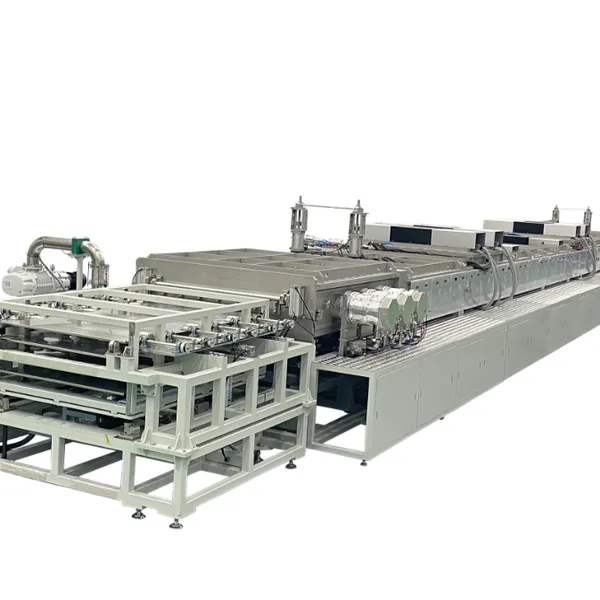
 Business License

What is a Vacuum Coating Machine?
In modern high-end manufacturing, vacuum coating has become an essential technology across a wide range of industries—from smartphone displays and automotive trim to precision optical lenses and advanced energy materials.
At the heart of this technology is the vacuum coating machine, a sophisticated engineering system that enables the controlled deposition of functional thin films with high precision, uniformity, and reliability.
As industries demand higher performance, durability, and environmental compliance, vacuum coating is no longer just a surface finishing method—it has become a core enabling technology for advanced materials and high-performance products.
What is a Vacuum Coating Machine?
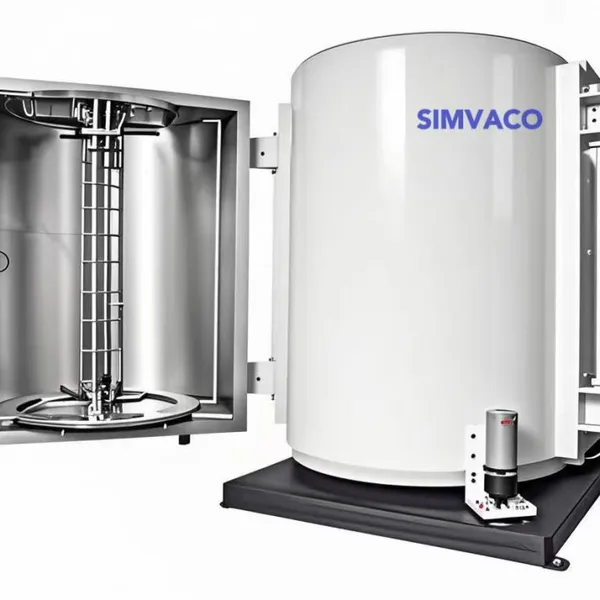
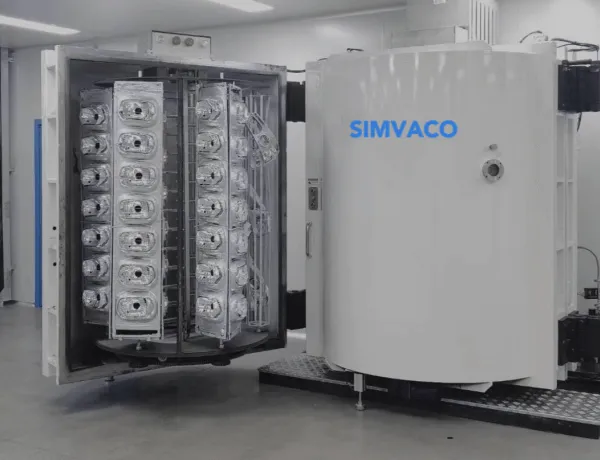
A vacuum coating machine is a highly engineered system used to deposit thin films onto substrates under controlled low-pressure environments using physical or chemical vapor deposition processes.
It is widely used in industries such as:
Consumer electronics (smartphone displays, camera optics)
Automotive (decorative and functional coatings)
Optics (AR/VR, HUD systems)
Semiconductor and energy materials
👉 In essence, vacuum coating is a non-equilibrium vapor deposition process where material transport, energy input, and surface reactions are tightly coupled.
How Does Vacuum Coating Work?
A vacuum coating process consists of three fundamental components:
1. Vacuum Environment
Extends mean free path of particles
Minimizes contamination and oxidation
Enables high-purity thin film growth
2. Material Source
Solid targets (metals, ceramics)
Evaporation materials
Reactive gases (O₂, N₂, CH₄)
3. Energy Input
Thermal energy (evaporation systems)
Plasma energy (sputtering, PECVD)
Chemical reaction energy (CVD processes)
👉 The interaction of these three defines film microstructure, adhesion, and performance.
PVD vs CVD: Key Differences in Vacuum Coating Technologies
PVD (Physical Vapor Deposition)
Processes:
Magnetron sputtering
Vacuum evaporation
Cathodic arc deposition
Working Pressure (Industrial Reality):
Sputtering: ~0.1 – 1 Pa
Evaporation: ~10⁻³ – 10⁻⁵ Pa
Arc PVD: ~10⁻¹ – 10⁻³ Pa
Advantages:
High purity films
Excellent control of thickness and composition
Ideal for metals, nitrides, and decorative coatings
CVD (Chemical Vapor Deposition)
Variants:
Thermal CVD
PECVD (Plasma Enhanced CVD)
Typical Reaction Example:
SiH₄ + O₂ → SiO₂ + H₂
👉 In real industrial processes, reaction pathways strongly depend on plasma density, substrate temperature, and gas ratios.
Advantages:
Superior step coverage
Dense and conformal coatings
Suitable for functional films (SiO₂, SiNx, DLC, SiC)
Vacuum Coating Machine Structure
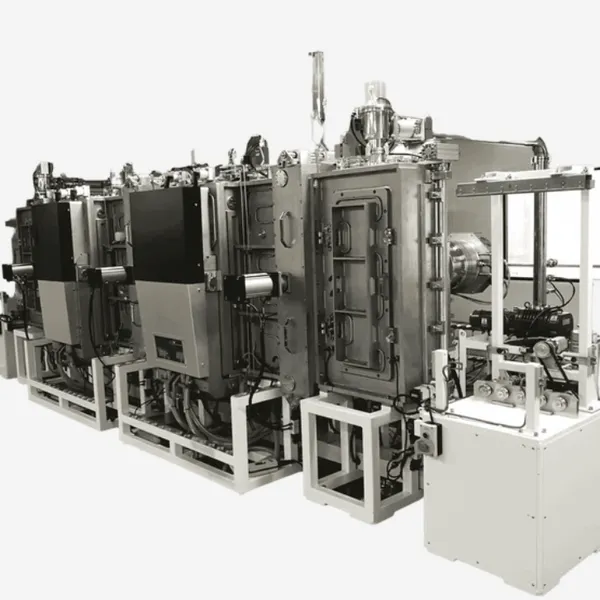
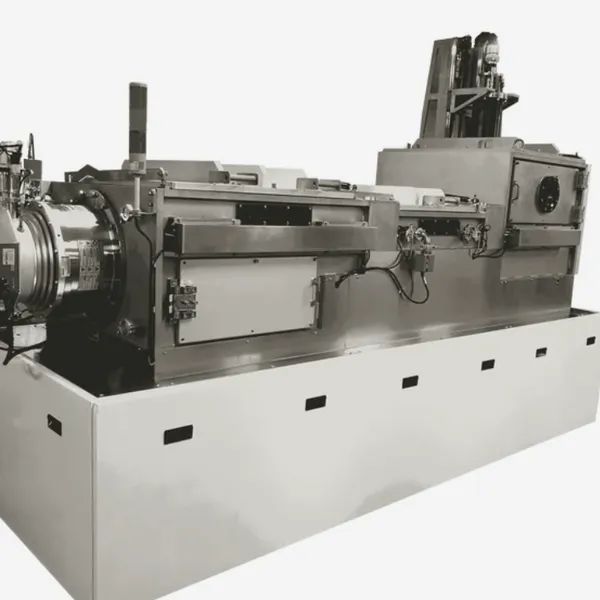
A modern vacuum coating system is a multi-subsystem integration platform:
1. Vacuum System
Roughing pumps (mechanical)
Roots pumps
High vacuum pumps (turbomolecular / diffusion)
👉 Determines contamination level and ultimate film quality
2. Deposition Source
Magnetron sputtering targets (planar / rotary)
Evaporation sources (resistive / e-beam)
Cathodic arc sources
3. Gas Control System
Mass Flow Controllers (MFC)
Reactive gases (Ar, O₂, N₂, CH₄)
4. Plasma System
DC / RF / pulsed power supplies
Ion bombardment improves adhesion and density
5. Substrate Handling
Batch systems (decorative, tools)
Roll-to-roll systems (films, flexible electronics)
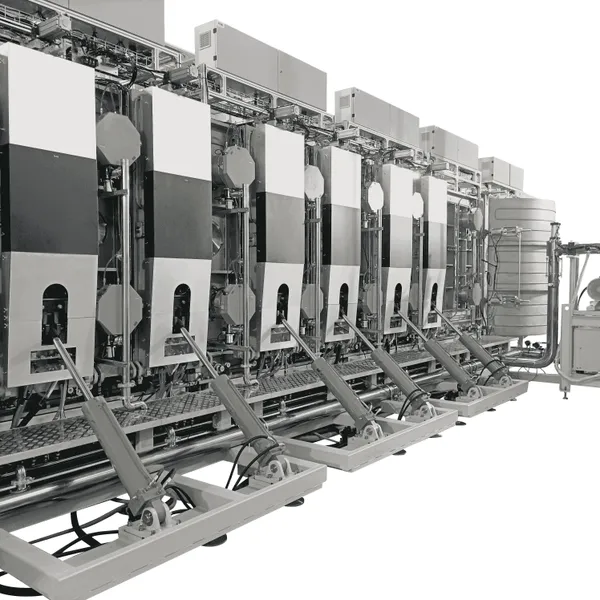
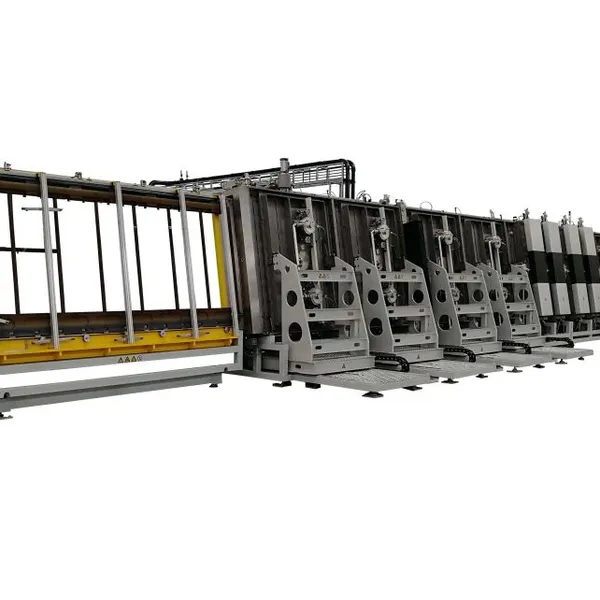
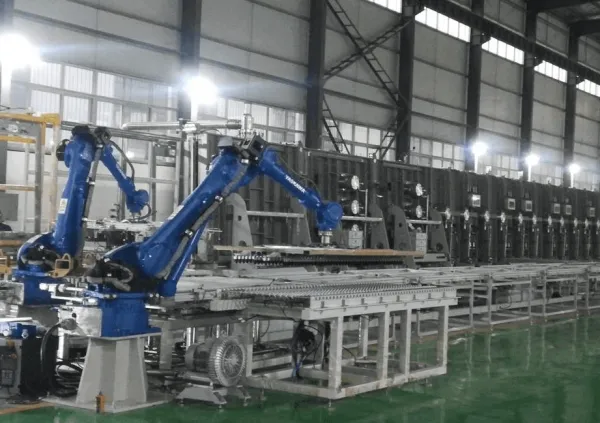
Inline systems (glass, large-area coating)
6. Automation & Control
PLC / industrial PC
Closed-loop control of pressure, gas, and power
Key Process Parameters and Their Impact on Film Performance
| Parameter | Engineering Impact |
|---|---|
| Vacuum level | Impurity incorporation, density |
| Substrate temperature | Crystallinity, stress |
| Ion energy | Adhesion, film compactness |
| Gas ratio | Stoichiometry, composition |
| Deposition rate | Uniformity, defect density |
👉 Critical Insight:
The real challenge is not deposition itself, but maintaining process stability and repeatability across large-scale production.
Industrial Applications
1. Optical & Display Coatings
Applications:
AR/VR waveguides
Automotive HUD
Camera lens modules
Technical Characteristics:
Thickness tolerance: ±1 nm
Multi-layer stacks: 10–100 layers
👉 Key challenge:
Thickness drift control across large substrates and multi-layer interfaces
2. Automotive & Decorative Coatings
Applications:
Plastic interior trims
Stainless steel decorative coatings
Functional anti-scratch layers
Typical Films:
TiN (gold color)
CrN (wear-resistant)
DLC (anti-scratch)
👉 Engineering Reality:
Adhesion on plastic substrates (ABS, PC) requires:
UV base coating
Plasma surface activation
Multi-layer deposition
3. Semiconductor & Electronics
Applications:
Interconnect layers
Barrier layers
Display panels (OLED, MiniLED)
Core Films:
Al, Cu (conductive layers)
SiO₂, SiNx (dielectrics)
👉 PECVD and sputtering are process-critical equipment
4. Energy & Functional Materials
Applications:
TCO coatings (ITO, AZO)
Battery barrier layers (Al₂O₃ via PECVD)
Hydrogen barrier films
👉 Trend:
Large-area + continuous inline production
5. Flexible Electronics & Emerging Tech
Applications:
Flexible displays
Electronic skin (e-skin)
Wearable devices
Key Challenges:
Low-temperature deposition
Polymer substrate compatibility (PET, PI)
👉 Roll-to-roll vacuum coating is a key enabling technology
Industry Trends (2026 and Beyond)
1. AR/VR and Automotive Optics Growth
Increasing demand for precision optical coatings
Multi-layer complexity as a technical barrier
2. Replacement of Electroplating
Vacuum coating vs electroplating:
No hazardous chemicals
Lower environmental impact
Better consistency
👉 Strong regulatory push from EU and North America
3. Large-Area Inline Coating Expansion
Architectural glass
Flexible electronics
Packaging films
👉 Inline sputtering systems are rapidly expanding
4. Multi-Functional Coatings
Anti-fingerprint + antibacterial + conductive
Integrated multi-layer solutions
5. AI-Driven Process Optimization
Data-driven parameter tuning
Improved yield and uniformity
Practical Buying Guide (For Industrial Decision Makers)
1. Total Cost Matters More Than Equipment Price
Total cost = Equipment + Process capability + Yield
2. Process Know-How is More Critical Than Hardware
Same configuration ≠ same performance
3. Choose Equipment Based on Application
Decorative ≠ Optical ≠ Semiconductor
👉 Completely different system architectures
4. Evaluate Long-Term Stability
Vacuum reliability
Target utilization
Maintenance cost
Conclusion: Vacuum Coating as a System Engineering Discipline
A vacuum coating machine is not just equipment—it is a multi-physics system integrating:
Vacuum science
Plasma physics
Materials engineering
Process control
👉 True competitiveness lies in:
Equipment design + Process expertise + Application integration
About SIMVACO (Integrated Vacuum Coating Solutions)
Choosing the right vacuum coating system requires not only hardware, but also deep process understanding and application experience.
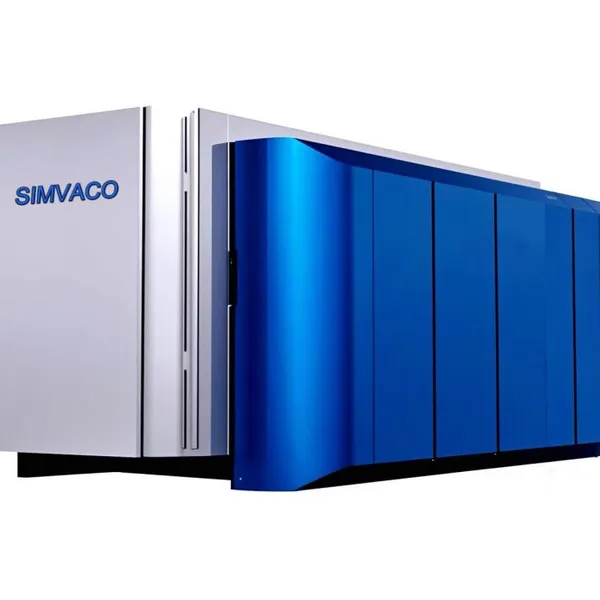
SIMVACO, as a professional vacuum coating machine manufacturer, provides:
PVD decorative coating systems (stainless steel & plastics)
Magnetron sputtering systems (optical & functional films)
PECVD systems (barrier and functional coatings)
UV + vacuum metallizing turnkey production lines
With strong capabilities in:
Plastic vacuum metallizing (UV + PVD integrated lines)
Roll-to-roll coating systems
Customized industrial solutions
SIMVACO delivers reliable, scalable, and application-driven coating systems to global customers.
Recently Posted
-
What is a Vacuum Metal Deposition?
April 17, 20261. Introduction to Vacuum Metal DepositionVacuum Metal Deposition (VMD), also known as vacuum metallization, is a high-precision t Read More
 -
Flexible Perovskite Solar Cells: Powering the Next-Generation Orbital Energy Systems
April 1, 2026As commercial space enters the era of mega-constellations and orbital infrastructure, energy systems are no longer just auxiliary Read More
 -
From Orbit to Grid: Vacuum Coating Technologies Enabling Space-Based Solar Power
March 27, 2026Introduction: From Concept to Engineering RealitySpace-Based Solar Power (SBSP) is not a new concept. However, around 2026, the in Read More
 -
Vacuum Coating Machine Price Guide: Choose the Right Equipment
March 17, 2026With the continuous upgrading of industries such as automotive electronics, consumer electronics, optical displays, new energy, an Read More

Contact Us
Recommended Products
-
 High-Performance Vacuum Coating Machine for Mirror Manufacturing SIMVACOUS$ 500000MOQ: 1 Unit
 -
SIMVACO Perovskite Solar Cell PVD Magnetron Sputtering Machine Thin Film Deposition SystemUS$ 650000 - 800000MOQ: 1 Set
-
SIMVACO Perovskite Solar Cell PVD Coating Machine Thermal Evaporation Vacuum CoatingUS$ 200000 - 400000MOQ: 1 Set
-
SIMVACO High-Performance Metal Ceramic PVD Coating Machine Hard Vacuum CoatingUS$ 350000 - 500000MOQ: 1 Set
-
SIMVACO Advanced Vacuum Evaporation Coating Equipment for Automotive LightingUS$ 70000 - 1000000MOQ: 1 Set
-
SIMVACO Eco-Friendly Vacuum Evaporation Coating Machine for Plastic Christmas ProductsUS$ 50000 - 60000MOQ: 1 Set
-
SIMVACO Large Glass Anti-Reflection Sputter Deposition Production Line PVD Coating MachineUS$ 1000000 - 1100000MOQ: 1 Set
-
SIMVACO Tool Superhard Coating Ion Plating Machine Enhanced Hard Film Deposition HardwareUS$ 50000 - 110000MOQ: 1 Set
-
SIMVACO Large-Area Multi-Arc Ion Decorative Coating Machine for Metal SurfacesUS$ 1000000 - 1100000MOQ: 1 Set
-
SIMVACO Horizontal PVD Coating Continuous Production Line Metal & Glass Substrate Magnetron SputteringNegotiableMOQ: 1 Set