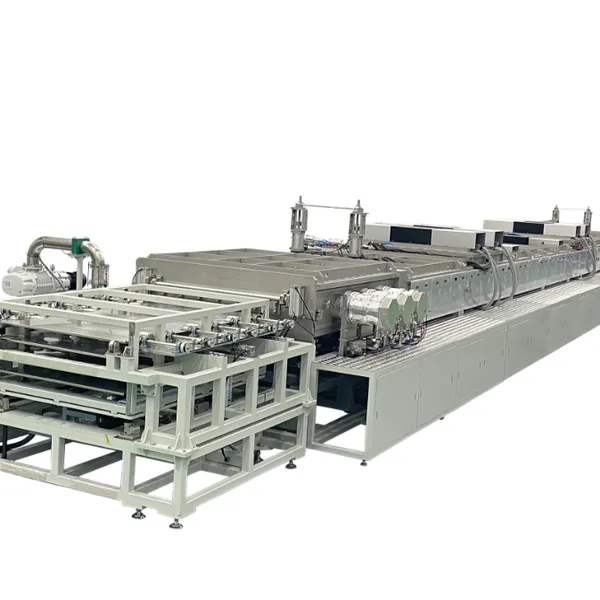
 Business License

Flexible Perovskite Solar Cells: Powering the Next-Generation Orbital Energy Systems
As commercial space enters the era of mega-constellations and orbital infrastructure, energy systems are no longer just auxiliary modules—they have become the primary bottleneck for industry expansion.
From low Earth orbit (LEO) communication constellations to orbital computing centers, and eventually to lunar and deep-space bases, power demands are skyrocketing, while launch costs and structural constraints remain largely unchanged. Traditional rigid solar cells (III-V or silicon-based) increasingly show limitations in power density, deployability, and scalable manufacturing.

In this context, flexible perovskite photovoltaics (Flexible Perovskite PV) are rapidly transitioning from laboratory prototypes to engineering-scale production. They are poised to become a core technology for space energy systems.
SIMVACO, a leading manufacturer of vacuum coating equipment, sits at the intersection of material innovation, process engineering, and scalable manufacturing, enabling the industrialization of next-generation space solar technology.
1. Flexible Perovskite PV: Material and Structural Innovation
1.1 Material Advantages: From Silicon to Perovskite
Perovskite solar cells, based on the ABX₃ crystal structure, offer several revolutionary features:
High absorption coefficient: Efficient light absorption with films only hundreds of nanometers thick
Tunable bandgap: Compatible with multi-junction (tandem) designs
Low-temperature processing (<150°C): Naturally compatible with flexible substrates
Manufacturing advantages:
Compatible with PI / PET flexible substrates
Supports roll-to-roll (R2R) continuous production
Reduces energy consumption and equipment complexity
For industry users: These features allow a direct transition from lab-scale samples to industrial-scale production, without intermediate steps.
1.2 Structural Innovation: From “Rigid Panels” to “Deployable Energy Systems”
| Parameter | Traditional Rigid Cells | Flexible Perovskite PV |
|---|---|---|
| Power-to-weight ratio | 50–150 W/kg | >500–1000 W/kg (potential) |
| Stowage | Fixed panel | Rollable (launch volume only 1/10 of rigid panels) |
| Manufacturing | Custom-built | R2R industrialized |
| Cost | High | Scalable, significantly lower |
Key Insight for Satellite Operators:
Rollable modules drastically reduce launch costs and payload volume
Flexible modules transform energy systems from “passive payloads” to actively deployable infrastructure
A simple visual: one roll of flexible solar module can replace ten rigid panels, reducing satellite mass and launch cost.

2. Key Commercial Space Applications
2.1 LEO Constellations: Energy Density Defines Constellation Capability
Single-satellite power: kW → 10 kW+
Payloads: Communications → Onboard computing and AI
Flexible perovskite PV advantages:
Supports modular energy design
Reduces launch cost per watt
Optimizes payload fairing volume
Conclusion: For mega-constellations, energy capability determines system scalability and ROI.
2.2 Orbital Computing Centers: AI in Space Requires Scalable Power
Core constraints: Energy supply + Thermal management
Flexible PV enables: integrated power generation and heat dissipation
Large-area radiative cooling ensures continuous, stable energy output
Enables orbital AI centers and space-based data hubs to scale compute resources without being constrained by power supply.
2.3 Lunar and Deep Space Energy Systems
Lightweight for transport, rapid deployment
Adapts to uneven or complex terrain
Serves as the core energy unit for lunar microgrids
Flexible PV modules reduce CAPEX and operational risk for lunar bases and deep-space missions.
3. Tandem Solar Cells: Efficiency Gains Translate to System-Level Benefits
3.1 Principle: Layered Spectral Utilization
Top layer: Perovskite (high-energy photons)
Bottom layer: Silicon / CIGS / narrow-bandgap material
Breaks single-junction efficiency limits, enhancing power density

3.2 Technical Pathways
| Pathway | Advantages | Industrial Maturity |
|---|---|---|
| Perovskite + Silicon | Lab efficiency >30% | Mature for terrestrial deployment |
| Perovskite + CIGS | Fully flexible, radiation-resistant, optimal for space | SIMVACO’s R2R CIGS expertise directly migrates to tandem production |
| All-Perovskite Tandem | Highest theoretical efficiency | Still in research stage |
For space applications, Perovskite + CIGS is the optimal solution, balancing efficiency, flexibility, and radiation tolerance.
3.3 System-Level Impact
Smaller solar arrays → lower mass
Reduced solar radiation pressure → easier ADCS control
Higher efficiency = lower launch costs + simplified spacecraft control
4. Industrialization Challenges and SIMVACO Solutions
4.1 Space Environment Stability
Threats: UV radiation, atomic oxygen, high-energy particles
Advantage: Perovskites can self-heal via photothermal activation
4.2 Thermal Cycling
Temperature swings: -150°C → +120°C
Challenges: Material mismatch, interface stress
Risk: Delamination, microcracks, performance degradation
SIMVACO solution: Equipment optimizes CTE matching and interface stress to maintain module integrity over tens of thousands of thermal cycles.
4.3 Encapsulation
Multi-layer barrier films
ALD + PECVD composite encapsulation
Ensures space-grade durability
4.4 Large-Area Consistency & R2R Manufacturing
Nanometer-scale thickness control
Meter-scale uniformity
Multi-chamber continuous deposition
Tension control prevents substrate stretching
High throughput with minimal defect rate
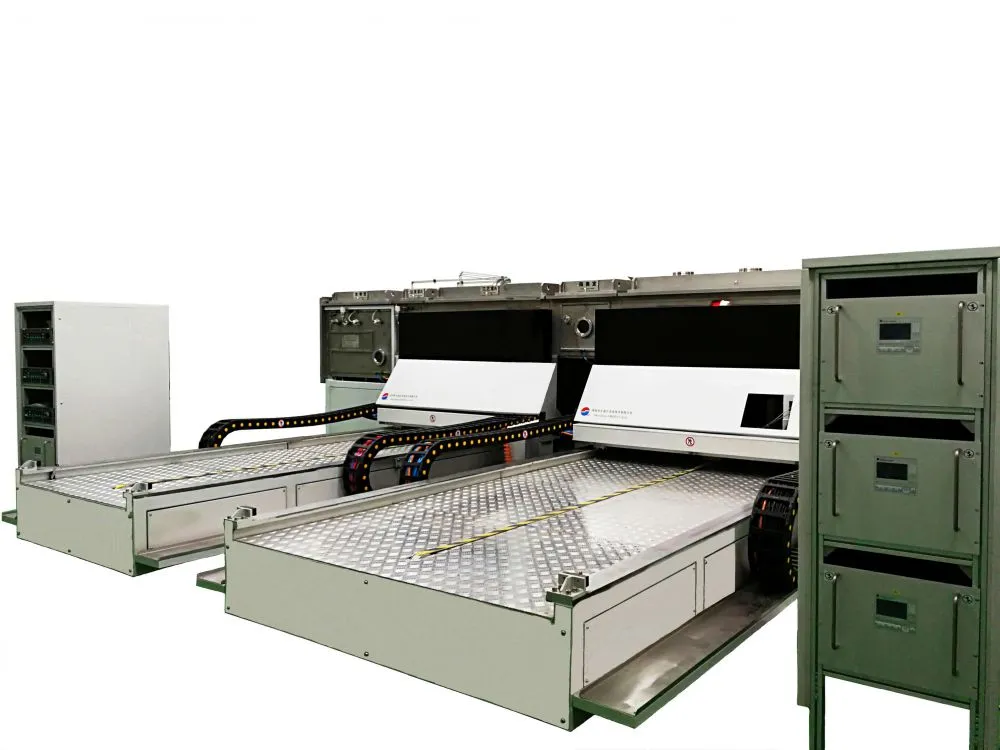
5. SIMVACO: From Equipment to Industrial “Mother Machine”
5.1 High-Throughput R2R Vacuum Coating
Magnetron sputtering: TCO, CIGS, electrodes
PECVD: Encapsulation, barrier layers
Evaporation: Metal and functional layers
Multi-layer continuous deposition
5.2 Atomic-Level Precision & In-Situ Monitoring
Thickness uniformity <1%
Real-time crystal growth and film uniformity monitoring
Closed-loop process control
Distinguishes top-tier industrial platforms from second-tier equipment suppliers
5.3 Space-Grade Encapsulation & Thermal Control
ALD + PECVD composite for atomic-scale defect filling + dense protective layer
Thermal cycling and interface stress control ensure long-term module performance
5.4 Perovskite + CIGS Synergy
Technology transfer from CIGS R2R expertise
Creates equipment and process moat
Supports optimal flexible perovskite space solutions
5.5 Three-in-One Capability
SIMVACO = Equipment + Process + System Solutions
| Parameter | Specification |
|---|---|
| Max substrate width | 900 mm |
| Tension control | ±0.01 N |
| Multi-chamber deposition | TCO / HTL / ETL / metal, integrated |
| Thickness uniformity | <1% |
| In-situ monitoring | Crystal growth, film uniformity |
| Thermal cycling tolerance | -150°C ~ +120°C |
| Encapsulation | ALD + PECVD multi-layer composite |
6. Future Outlook: GW-Scale Orbital Energy
2026–2035 trends:
Flexible PV scales to industrial deployment
Tandem perovskite becomes mainstream
Orbital energy systems approach GW-level output
Core insight: In 21st-century space operations, power, not fuel, is the main constraint
📌 Conclusion: Manufacturing Capability = Gateway to Orbital Economy
Flexible Perovskite PV = material revolution entry point
Vacuum coating = core industrial capability
SIMVACO is enabling the transition from lab to production line, from Earth to orbit.
Manufacturing capability is the core competitive advantage for the industrialization of space energy.
SIMVACO is not just an equipment supplier—we are building the industrial mother machine for future orbital power grids.
Recently Posted
-
What is a Vacuum Metal Deposition?
April 17, 20261. Introduction to Vacuum Metal DepositionVacuum Metal Deposition (VMD), also known as vacuum metallization, is a high-precision t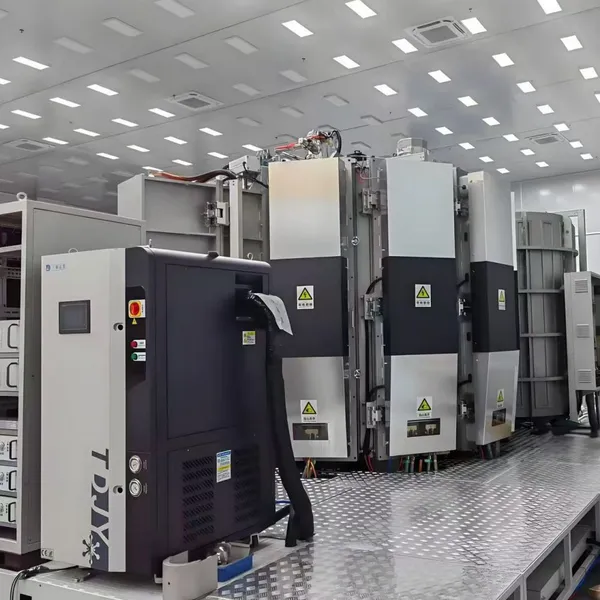 Read More
 -
What is a Vacuum Coating Machine?
March 31, 2026In modern high-end manufacturing, vacuum coating has become an essential technology across a wide range of industries—from smartph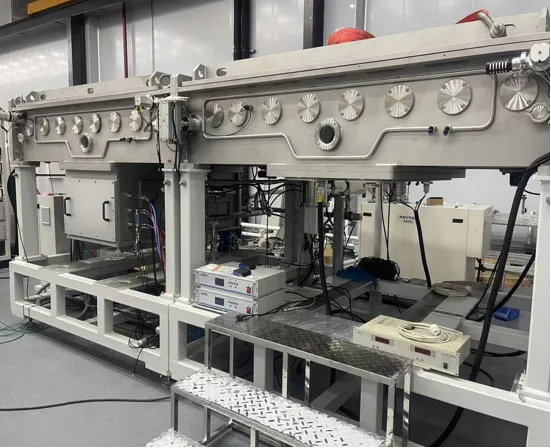 Read More
 -
From Orbit to Grid: Vacuum Coating Technologies Enabling Space-Based Solar Power
March 27, 2026Introduction: From Concept to Engineering RealitySpace-Based Solar Power (SBSP) is not a new concept. However, around 2026, the in Read More
 -
Vacuum Coating Machine Price Guide: Choose the Right Equipment
March 17, 2026With the continuous upgrading of industries such as automotive electronics, consumer electronics, optical displays, new energy, an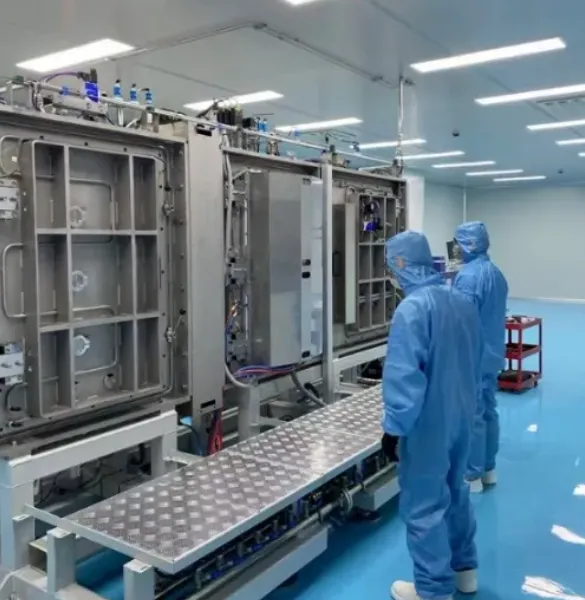 Read More

Contact Us
Recommended Products
-
 High-Performance Vacuum Coating Machine for Mirror Manufacturing SIMVACOUS$ 500000MOQ: 1 Unit
 -
SIMVACO Perovskite Solar Cell PVD Magnetron Sputtering Machine Thin Film Deposition SystemUS$ 650000 - 800000MOQ: 1 Set
-
SIMVACO Perovskite Solar Cell PVD Coating Machine Thermal Evaporation Vacuum CoatingUS$ 200000 - 400000MOQ: 1 Set
-
SIMVACO High-Performance Metal Ceramic PVD Coating Machine Hard Vacuum CoatingUS$ 350000 - 500000MOQ: 1 Set
-
SIMVACO Advanced Vacuum Evaporation Coating Equipment for Automotive LightingUS$ 70000 - 1000000MOQ: 1 Set
-
SIMVACO Eco-Friendly Vacuum Evaporation Coating Machine for Plastic Christmas ProductsUS$ 50000 - 60000MOQ: 1 Set
-
SIMVACO Large Glass Anti-Reflection Sputter Deposition Production Line PVD Coating MachineUS$ 1000000 - 1100000MOQ: 1 Set
-
SIMVACO Tool Superhard Coating Ion Plating Machine Enhanced Hard Film Deposition HardwareUS$ 50000 - 110000MOQ: 1 Set
-
SIMVACO Large-Area Multi-Arc Ion Decorative Coating Machine for Metal SurfacesUS$ 1000000 - 1100000MOQ: 1 Set
-
SIMVACO Horizontal PVD Coating Continuous Production Line Metal & Glass Substrate Magnetron SputteringNegotiableMOQ: 1 Set